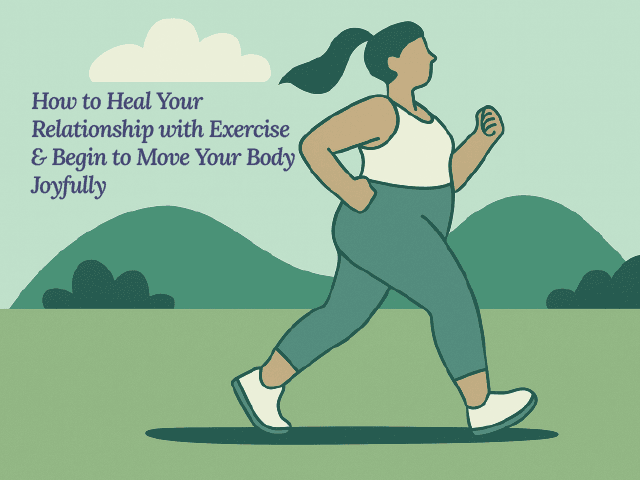
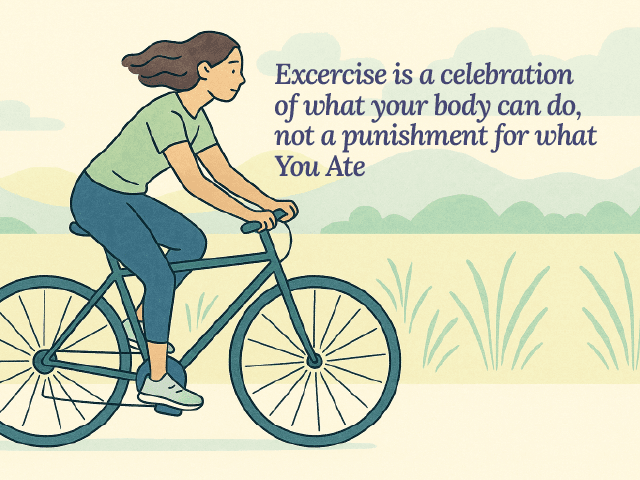
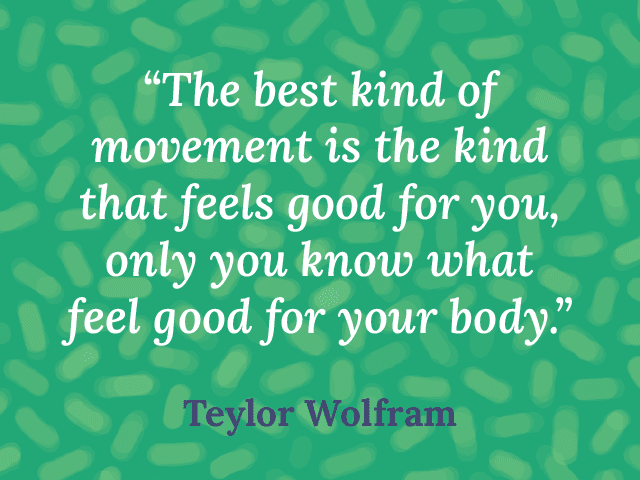
This is where joyful movement differs–the intention behind joyful movement is to have fun, to find pleasure, and to find joy through movement.
It’s important to recognize that for some people, typical “toxic ED exercises” (like running or weight-lifting) might truly be a form of joyful movement for them. This is a delicate area, which is why it is SO important to check your true intentions behind the exercise. Therapy and specifically the help of a specialist can help you clarify your intentions and guide you toward movement that truly helps to support you in your recovery.
As you engage in movement throughout your recovery, keep your intentions in mind. Remember, we want to challenge what your eating disorder is telling you to do–if your ED gremlins are screaming at you when you move your body joyfully, you’re doing it right!
So, to reiterate, the goal is to move your body because you want to and you get to–not because you have to.
Reconnecting with Joyful Movement
An easy way to ensure you are moving your body because you want to and because you get to is to think about how you used to move your body when you were a kid.
Think about it! Maybe you used to hopscotch, jump in puddles, dance, jump on the trampoline. The way we moved our bodies as children represents the simplicity of joyful movement.
We did not move to change our bodies.
We did not move to look a certain way.
We moved to release energy and to have fun.
What you must remember is that any form of movement can turn TOXIC if your intentions change. And YOU are the only one who will ever truly know your intentions behind movement. So, after reading about all the kinds of joyful movement, we want to know…
What forms of movement do you genuinely enjoy?
Take the Next Step: Get Help from a Team
FAB’s Body Image Therapist, Morgan, can help you heal your relationship with movement. If you are thinking of seeking treatment and trying therapy or are wanting to take the next step in healing your relationship with movement,
take the FAB quiz. This two minute quiz on our website will provide insight into your relationship with food, body, and exercise. From there, you can choose to set-up a consultation with a FAB specialist to explore further the ways you may be struggling